



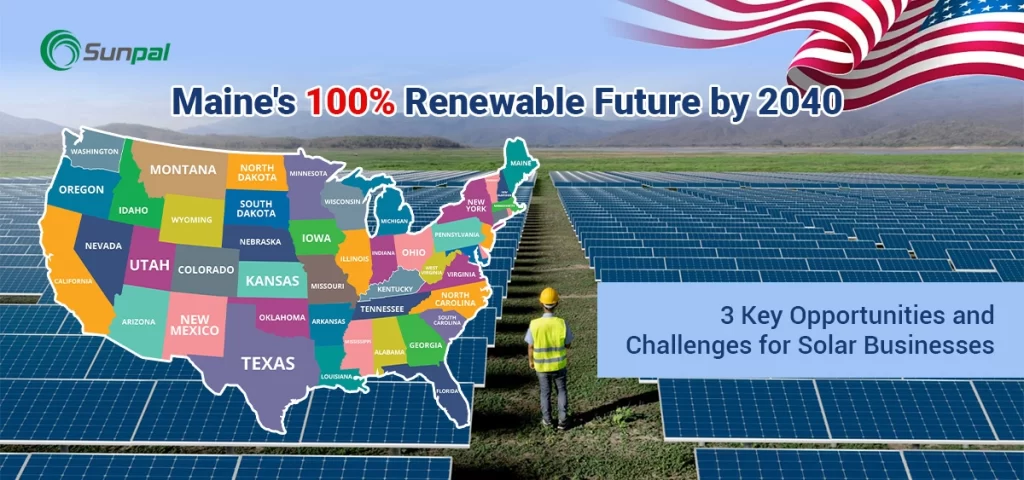
Governor Janet Mills was recently awarded the “Clean Energy Champion” title by the Maine Renewable Energy Association for her strong leadership in driving the state's clean energy transition. Her administration has set an ambitious target of 100% clean electricity by 2040. This policy creates substantial opportunities alongside practical challenges for solar installers and distributors, especially those specializing in solar plus storage solutions in a cold-climate environment.
This comprehensive guide examines the three major opportunities and three primary challenges, offering actionable strategies for solar professionals to succeed in Maine's dynamic market.
Maine's Clean Energy Vision and Policy Framework
Maine is aggressively pursuing a clean energy future. In June 2025, Governor Mills signed landmark legislation (LD 1868) that codifies the goal of 100% clean electricity by 2040. This accelerates earlier targets, including 80% renewables by 2030, and establishes a new Clean Energy Standard (CES) with 90% from renewable resources and 10% from additional clean resources by 2040.
The policy builds on her earlier efforts, including increasing the Renewable Portfolio Standard (RPS) and supporting significant new clean energy capacity. As of early 2026, Maine has surpassed 50% renewable electricity generation in many periods, with solar playing an increasingly important role.
Current Progress and Key Statistics:
- Solar capacity reached approximately 1,704 MW installed as of January 2026, with projects in every county.
- Over 100,000 customers benefit from solar through various programs.
- Energy storage stands at around 63 MW grid-connected, with a major 175 MW project under construction in Gorham (expected online early 2026) and over 200 MW more in the interconnection queue.
State Targets:
- At least 300 MW of energy storage by the end of 2025.
- At least 400 MW of energy storage by the end of 2030.
🌱 Maine's Path to 2040 Clean Energy
Roadmap to 100% Clean Electricity by 2040
📅 Clean Energy Policy Timeline (2019–2040)
2019
80% Renewable by 2030
2023
100% Clean by 2040 Announced
2025
LD1868 Signed
2030
80% Renewable Target
2040
100% Clean Electricity
☀ Solar Capacity Growth
🔋 Energy Storage Targets
👷 Clean Energy Workforce Distribution
Federal incentives from the Inflation Reduction Act (IRA), including the Investment Tax Credit (ITC) for solar + storage, stack effectively with Maine-specific programs. These include updated net energy billing (though with recent adjustments for larger projects), Efficiency Maine rebates and initiatives, property tax exemptions, and sales tax exemptions on solar equipment.
Energy storage is especially critical in Maine. The state experiences cold winters with high heating demand (driven by electrification and heat pumps), low solar irradiance in winter months, and frequent storms. Batteries enable load shifting, backup power during outages, peak shaving, and improved grid stability — making solar plus storage hybrid systems essential for reliably meeting the 2040 goal without compromising reliability.
Maine's progress positions it as an emerging leader in the Northeast. Neighboring states like New York and Massachusetts pursue similar aggressive targets, creating broader regional opportunities for solar installers and distributors who develop expertise in policy-compliant, climate-resilient solutions. Forward-thinking companies can leverage Maine experience for expansion across New England.
Opportunity 1: Surging Demand for Solar + Storage Hybrid Systems
The 2040 100% renewable energy goal is driving strong and sustained demand for integrated solar plus storage systems. While solar generation has grown rapidly, its intermittency requires reliable storage to ensure grid stability and customer resilience.
Market Projections:
- Solar capacity is expected to continue expanding significantly through 2030 and toward 2040 to help meet rising electricity demand from electrification.
- Storage deployment targets (300 MW by 2025, 400 MW by 2030) create immediate and medium-term opportunities for hybrid project developers and installers.
- Distributed and community-scale projects, alongside larger procurements, will require sophisticated integration.
Key Applications for Maine Solar Installers and Distributors:
- Residential: Homeowners seeking energy independence, protection from outages, and lower long-term bills amid high electricity rates ($0.27–$0.32/kWh).
- Commercial & Industrial: Businesses pursuing ESG goals, peak demand reduction, and backup power.
- Agricultural: Farms needing reliable power for operations and potential revenue from excess generation.
- Community Solar: Shared arrays serving multiple subscribers, though recent policy adjustments have shifted focus.
Maine's harsh climate demands robust, cold-weather performance. LiFePO4 batteries excel with excellent low-temperature tolerance, 6,000+ cycle life, superior safety (low fire risk), and minimal maintenance — making them ideal for long-duration storage needs during extended winter periods.
🌱 Projected Solar + Storage Growth in Maine (2025–2040)
Brattle Group / Maine DOER Pathways Model + ISO-NE + SEIA Forecast Integration
📊 Solar Capacity (Stacked) + Energy Storage Growth Pathway
Solar growth accelerates after 2030 driven by IRA incentives and 100% clean electricity mandate. Storage expands significantly post-2030 due to hybrid system penetration (50–70%+ by 2040).
For installers and distributors, this opportunity means higher project values (often 30-50% uplift with storage), recurring revenue from maintenance, monitoring, and optimization services, and strong competitive differentiation. Early movers who master solar plus storage Maine solutions will capture significant market share as demand accelerates under the 2040 mandate.
Opportunity 2: Improved Project Economics and New Revenue Streams
Robust policy support dramatically improves project economics. Stacking the federal ITC (up to 30% or more with domestic content/adders for solar + storage) with Maine incentives shortens payback periods and boosts internal rates of return. Customers enjoy long-term price stability as renewables displace volatile fossil fuel costs.
New Revenue Opportunities for Your Business:
- Turnkey design, engineering, procurement, and installation of hybrid solar + storage systems.
- Facilitating project financing and offering performance-based maintenance contracts.
- Ongoing monitoring, optimization software, and system upgrade services.
- Distribution and supply of high-quality, cold-climate-rated components that meet policy and utility requirements.
Distributors benefit from growing order volumes and the need for reliable supply chains capable of delivering equipment suited to Maine's conditions. Installers can expand profitably into rural areas where energy resilience and independence command premium value. Commercial solar projects Maine and agricultural applications offer particularly attractive economics through demand charge reduction and backup capabilities.
💰 ROI Journey: Solar + Storage Investment in Maine
Example 8–10 kW Solar PV + 13.5 kWh Battery System (2026)
📈 From Investment to Long-Term Savings
A typical Maine solar + storage project requires approximately $34,400 upfront investment. The system reaches break-even around Year 13–14 and generates approximately $95,000 cumulative savings over 25 years.
This combination of strong incentives, high retail electricity rates, and customer demand for resilience creates a compelling business case. Solar companies aligned with state goals can expect sustained growth, repeat business, and enhanced profitability over the coming decade.
Opportunity 3: Market Leadership and Long-Term Competitive Advantage
Maine's solar market is still maturing compared to larger states such as California or Massachusetts. This gives early entrants a strategic window to build dominant local positions and brand authority.
Companies that excel in cold-climate hybrid installations, complex policy navigation, and reliable project delivery will become preferred partners for larger developers, utilities, and municipalities. Expertise gained in Maine transfers directly to other Northeast states pursuing similar clean energy goals, enabling regional scaling.
Strategies for Leadership:
- Develop compelling local case studies demonstrating real-world winter performance and ROI.
- Forge strong relationships with utilities, municipalities, and stakeholder groups.
- Invest in team training on advanced storage integration and smart energy management.
- Position your company as the expert in meeting Maine solar incentives, renewable portfolio requirements, and cold-climate resilience standards.
Businesses that act decisively now will enjoy lasting competitive advantages, including higher margins, stronger referral networks, and greater resilience to market fluctuations in this policy-driven environment.
Challenge 1: Technical and Climate-Related Hurdles
Maine's winters present significant technical demands: heavy snow and ice loading on arrays, extreme cold affecting equipment performance, and low solar irradiance precisely when heating demand peaks. Rural grid constraints and interconnection queues can further complicate deployments.
Practical Solutions:
- Deploy elevated racking systems and snow-shedding panel designs to minimize snow accumulation and maintenance.
- Use cold-rated LiFePO4 batteries equipped with thermal management systems for reliable operation in sub-zero temperatures.
- Intelligently oversize arrays and incorporate advanced energy management systems for optimal seasonal performance.
- Conduct thorough site-specific engineering assessments that account for micro-climates and loading requirements.
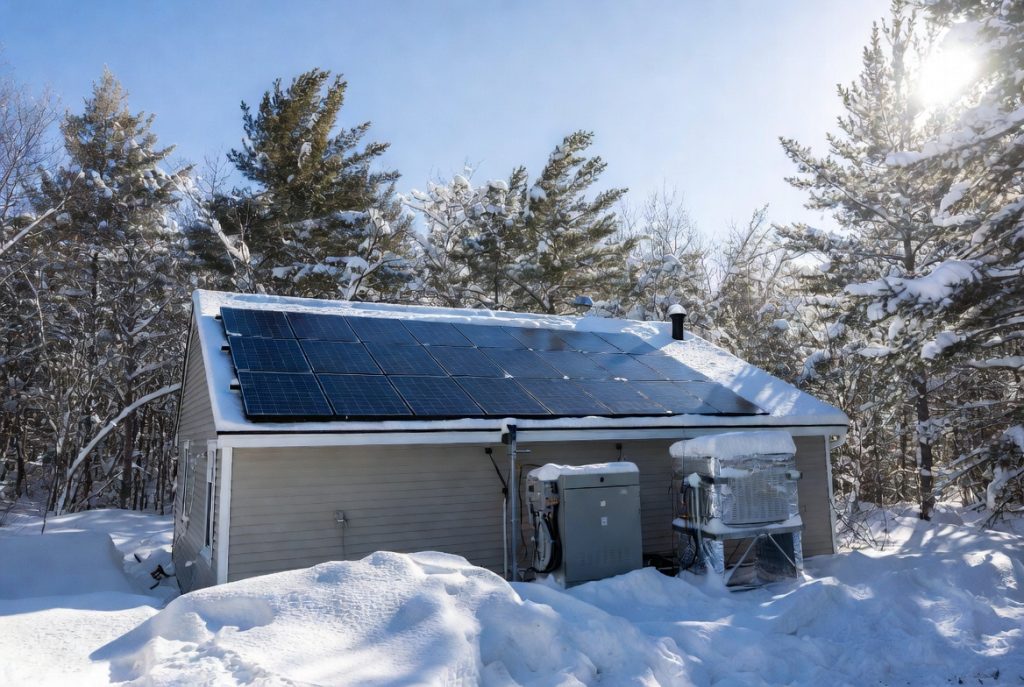
Successful projects demonstrate that with proper engineering, hybrid systems can deliver excellent year-round performance and help customers achieve energy independence even during harsh winters.
Challenge 2: Regulatory, Permitting, and Workforce Issues
Permitting, zoning, and interconnection delays remain common pain points, particularly for projects in rural areas or those involving larger capacities. Recent policy changes have also introduced new fees and eligibility adjustments for certain community solar configurations. Skilled labor shortages for qualified installers and technicians trained in modern storage integration continue to constrain growth.
Effective Strategies:
- Build proactive relationships with utilities and leverage ombudsman or expedited review processes where available.
- Partner with workforce training programs and community colleges to develop local talent pipelines.
- Streamline internal workflows for combined solar + storage applications to reduce approval timelines.
- Stay current with evolving rules through resources like the Maine Solar and Energy Storage Handbook for Communities.
Companies that master these processes gain a clear competitive edge through faster project completion and higher customer satisfaction.
Challenge 3: Economic and Supply Chain Risks
Upfront capital costs, fluctuating material prices, and the need for 20–30+ year system reliability to match long-term policy horizons require careful management. Financing complexities and occasional policy adjustments add layers of uncertainty.
Mitigation Approaches:
- Partner with established suppliers offering strong warranties, proven cold-climate performance, and stable logistics.
- Utilize comprehensive economic modeling tools that fully incorporate all available incentives and potential revenue streams.
- Diversify project portfolios across residential, commercial, and community segments.
- Prioritize high-cycle-life, safe battery technologies like LiFePO4 to minimize long-term replacement risks.
Proactive risk management turns these challenges into opportunities for higher-value, more resilient offerings.
Practical Strategies: How to Succeed in Maine's Market
- Master Policy Details — Closely track updates to distributed solar programs, storage procurements, IRA stacking opportunities, and net energy billing rules.
- Prioritize Hybrid Solutions — Offer integrated LiFePO4-based systems specifically optimized for Maine's winter conditions and long-duration needs.
- Design for Local Conditions — Incorporate snow loading calculations, cold-weather battery performance data, and seasonal production modeling in every proposal.
- Streamline Operations — Develop efficient permitting, interconnection, and installation workflows with local partners.
- Educate and Support Customers — Provide transparent ROI projections, resilience modeling, and clear explanations of bill savings and environmental benefits.
- Document and Market Success — Collect performance data and build credible case studies to showcase real results in Maine conditions.
Solar professionals who combine deep technical knowledge, policy expertise, and customer-focused service will not only survive but thrive in Maine's evolving market.
Conclusion and Call to Action
Maine's 2040 100% renewable energy goal, driven by Governor Mills' leadership, represents a major growth opportunity for solar installers and distributors. While technical, regulatory, and economic challenges exist, strong incentives, high electricity rates, and rising demand — particularly for solar plus storage — create a compelling environment.
Maine is emerging as a bellwether for the Northeast U.S. clean energy transition. Companies that invest now in hybrid system expertise, local relationships, and resilient solutions will secure significant market share and long-term success.
Ready to grow in Maine?
Schedule a consultation with Sunpal experts for tailored LiFePO4 battery recommendations and complete solar energy storage system solutions optimized for policy-driven markets. Explore our resources today and position your business at the forefront of Maine's clean energy boom.